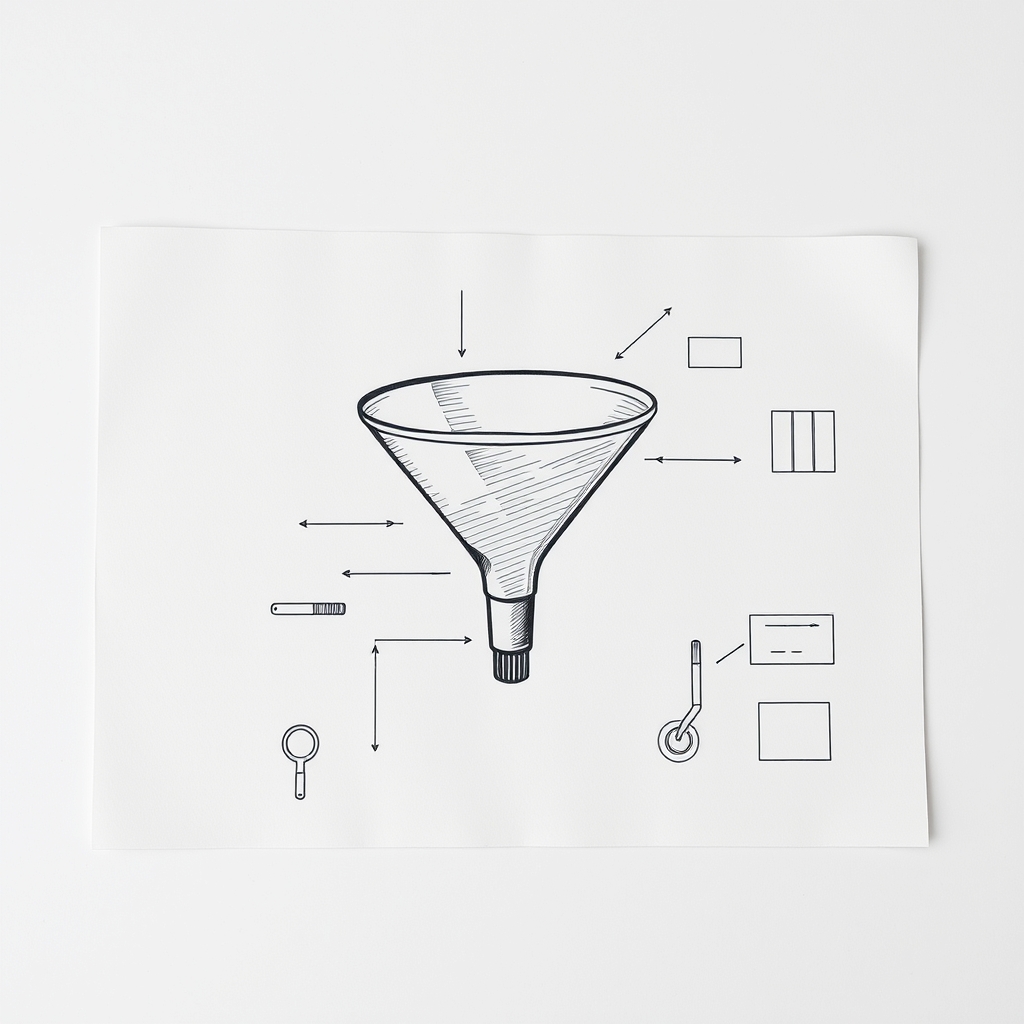
A coaching funnel is a simple path: a stranger finds you, gets something useful, and either books a conversation or buys. Most of the work is deciding what that path looks like for your offer. The software comes second.
First, pick the funnel shape that fits your offer
Coaching is a high-trust sale, so the right shape depends mostly on your price and how much explaining your offer needs.
Lower-priced or group offers: the direct-sale funnel
A landing page leads to a checkout, then to a thank-you page with onboarding steps. It's quick to build, and it works when the offer is easy to understand without a conversation.
Higher-priced one-on-one coaching: the call-booking funnel
A free resource (a checklist, short video, or mini-training) leads to an opt-in page, then a short email sequence, then a booking or application page. You sell on the call. This is the most common coaching setup because people rarely pay a premium for coaching without talking to the coach first.
If you're unsure, start with the call-booking funnel. It's less to build than a full automated sales system, and the calls teach you what people actually ask.
The setup blueprint
- Write the offer in one sentence. Who it's for, what problem it addresses, and the format (for example, "twelve weeks of one-on-one sessions"). If you can't say it plainly, no page will fix that.
- Choose one lead magnet. Make it narrow and tied to the paid offer. A broad "10 tips" PDF attracts people who never buy. A resource solving the first small problem your clients have works better.
- Build the opt-in page. One headline, a short description, an email field, and nothing else. Skip the navigation menu.
- Write three to five emails. Deliver the resource, tell a short story about a problem you help with, answer the most common objection, and invite readers to book. Keep them short and written like a person.
- Create the booking or application page. A short application form (three to five questions) filters out poor fits before you spend time on a call.
- Set up payment. A payment link or checkout for after the call, or directly on the page for direct-sale offers.
- Add tracking. At minimum, count visitors, opt-ins, bookings, and sales. Without those numbers you can't tell where people drop off.
For the full walkthrough of the first build, see How to Build Your First Sales Funnel: Step-by-Step Tutorial. Before going live, run through the Funnel Setup Launch Checklist: Domain, Payments, Email and Tracking. Most launch-day problems come from skipping one of those four items.
What to skip at the start
- Multi-step upsell chains. They suit low-priced products sold at volume. For coaching they mostly add complexity.
- Webinars. They can work, but they take a lot of preparation. Prove the simpler funnel first.
- Elaborate automations. Branching sequences based on every click are hard to maintain. One linear sequence is enough to start.
- Custom design. A clean template beats a delayed launch.
 Recommended for youHow to Build Your First Sales Funnel: Step-by-Step Tutorial
Choosing software: what actually matters for coaches
Whichever tool you choose, it needs to cover five things: pages, email, booking, payments, and basic reporting. Some platforms include all five. Others need to be connected to separate tools. Check these before you commit:
- Can it send email sequences, or will you need a separate email service?
- Does it include scheduling, or does it integrate with a booking tool you already use?
- Which payment processors does it support in your country?
- Can you use your own domain?
- How easy is it to export your contacts and pages if you leave?
Plans, limits, and features change often, so confirm current details on each vendor's official site rather than relying on a review (including ours) that may be out of date.
Three common approaches, and their tradeoffs
| Approach | Good fit if | Tradeoff |
|---|---|---|
| Free or entry-level all-in-one tool | You're testing an offer and want to keep costs low | Free tiers usually come with limits. Check them against your plan, and expect some fiddling with design. |
| Established funnel-focused platform | You want funnel templates and a large community of tutorials | Costs can rise as you add contacts or features, and moving away later takes effort. |
| CRM-style platform for client management | You run several clients or services and want follow-up and pipelines in one place | It's often more than a solo coach needs, and the learning curve can be steeper. |
| Separate tools stitched together | You already have a website, scheduler, and email service you like | Maximum flexibility, but you maintain every connection yourself. |
If budget is tight
Systeme.io is one option with a free plan, which makes it a reasonable place to test a first funnel without paying up front. Our walkthrough for building a funnel in Systeme.io on the free plan shows what that looks like in practice. Confirm what the free plan currently includes on their site before relying on it.
If you're already on a platform
Switching tools is possible but rarely painless. Pages usually need to be rebuilt, and automations need to be re-created. If you're weighing a switch, read Can you move a funnel from ClickFunnels to GoHighLevel? for what does and doesn't carry over. Don't switch tools to fix a funnel problem that's really an offer or traffic problem.
Where to compare options
If you've settled on a funnel shape and want to compare specific platforms side by side, use our review and comparison pages. Check them against the list of questions above. Then pick the tool whose limits you can live with, not the one with the longest feature list.
If you teach courses as well as coach, the structure differs slightly. See Sales Funnel for Course Creators: Setup Blueprint and Platform Picks. More examples are in the Funnel Setup Tutorials & Use Cases hub.
Honest cautions
- No funnel guarantees clients. Results depend on your offer, your audience, and your traffic. Treat your first version as a test.
- Be careful with claims. Don't publish income promises or client results you can't document. Rules on testimonials and earnings claims vary by country, and coaching in areas like health or finance carries extra obligations. Check with a qualified professional if you're unsure.
- Respect email consent. Laws such as GDPR and CAN-SPAM govern how you collect and use email addresses. Ask a legal professional what applies to you.
A sensible first month
In week one, write the offer and the lead magnet. In week two, build the opt-in page, emails, and booking page. In week three, test everything yourself and send traffic from people you already know. In week four, review your numbers and fix the weakest step. That's enough to find out whether the idea has legs.
Keep reading
 How to Build a Funnel in Systeme.io on the Free PlanSysteme.io is an all-in-one marketing tool that bundles funnels, email, and a few other pieces in o…
 Funnel Setup Launch Checklist: Domain, Payments, Email and TrackingMost funnel launches don't fail because of the headline or the button color. They fail because the…
 Sales Funnel for Course Creators: Setup Blueprint and Platform PicksA course funnel is a short path that takes a stranger from "never heard of you" to "enrolled," usua…